A First-Morning Plan for an Unfamiliar Trip
Plan an unfamiliar trip with a clear first move, useful wayfinding cues, and a calm fallback so you can keep going when the street looks different.
A first-morning plan for an unfamiliar trip should prepare you to recognize the route, not memorize it. Before leaving, know where to begin, what signs or landmarks to look for, and how to recover if the street does not match the map. Those cues make a trip easier to manage without turning every block into an instruction.
Choose useful landmarks
Write down the place you will actually leave from. “Near the library” may be too vague if the block has several entrances; “the west doors on Cedar Street” gives you a clear starting point. Do the same for the destination. A building with several entrances needs a more useful target than its name alone.
Choose landmarks you can see or read on the way: a station name, a large intersection, a distinctive public building, or a street sign. Prefer fixed features over details that can change, such as a parked vehicle or a temporary sidewalk display. A transit app can help you locate stops and service notices, while a saved map or screenshot can provide a reference if your signal drops.
Check that the map points to the entrance you need, not merely the center of a building or the first search result. Keep the destination address in text as well. That gives you something precise to show a transit employee or compare with a street sign if you become unsure.
Practice reading the route
Before you go, trace the route once from the starting point to the destination. Notice the names of the streets or stations you expect to encounter, then close the map and see what you can recall. You do not need to remember every turn. The point is to recognize the next useful cue when it appears.
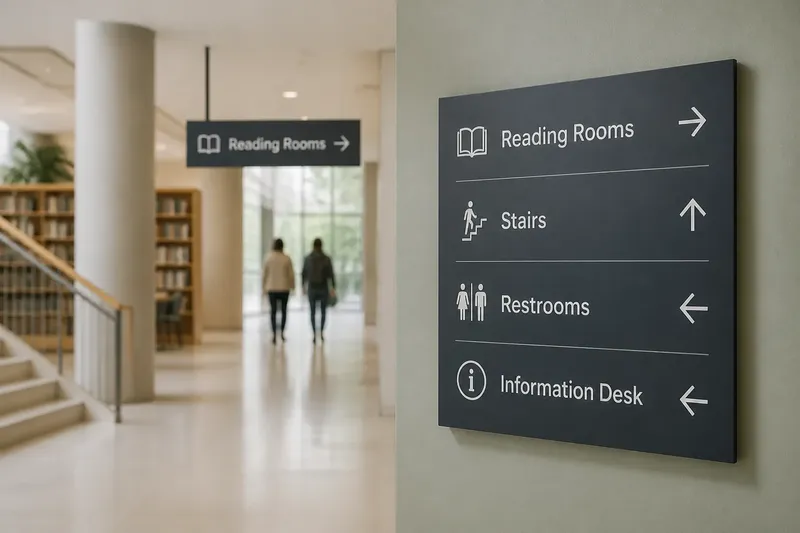
Transit signs may use a line’s final stop rather than a compass direction. A bus may display a neighborhood or major street. Note the wording shown in the app or route map, then confirm it on the platform or vehicle display before boarding. If two services have similar names, compare the route number, destination sign, and direction together.
For a street walk, identify the first turn and one landmark near the destination. At a large plaza or intersection, stop somewhere out of the flow of foot traffic before checking the map. Repeatedly glancing at a screen while walking is not worth the effort if you can pause, orient yourself, and then continue with your attention on the street.
Keep a short route note
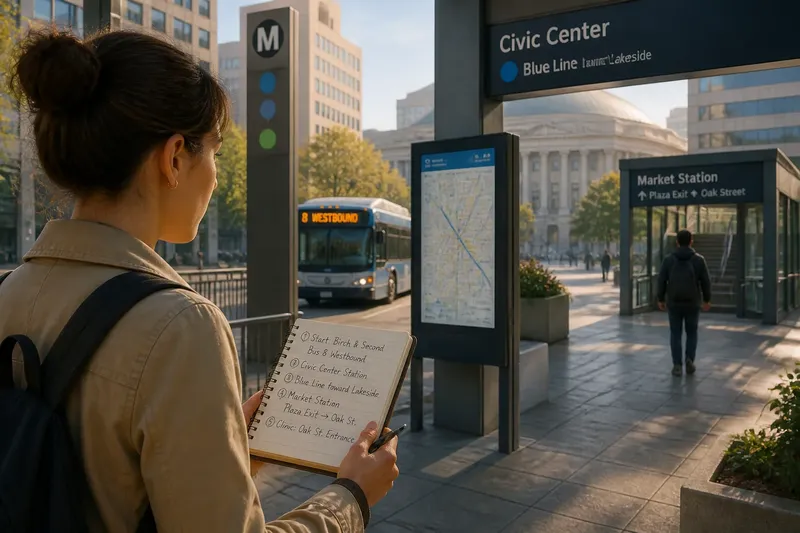
Write a compact note that captures decisions you might otherwise have to make under pressure. For example: “Board the westbound 8 at Maple and Third; leave at Civic Center; follow signs for the blue line toward Lakeside; at Market Station, use the plaza exit for Oak Street.” This is a wayfinding cue, not a script. Station signs and service notices still take priority if conditions change.
Say you are starting at a hypothetical apartment entrance on Birch Street and heading to a hypothetical clinic across a station plaza. Your saved map points to the clinic’s Oak Street entrance. You write down the bus stop at Birch and Second, the bus destination shown in the app, the Civic Center station name, and the plaza exit at Market Station. At Civic Center, the platform sign shows a different line direction than you expected, so you pause and match the displayed destination with your saved route before boarding. At Market Station, you follow the plaza-exit signs, compare the clinic address with the Oak Street sign, and reach the entrance you intended. The note helps you verify each cue; it does not require you to follow an outdated instruction blindly.
What should you notice?
What if a station sign differs from my note?
Check the line name, destination, and service notice before boarding. If they still do not match, wait in a safe public area and ask station staff or consult the transit app rather than guessing.
How do I find the right entrance?
Compare the destination address with the street name and entrance information on your map. If the building has several public doors, choose the one that matches your arrival side or agreed meeting point.
What should I save before leaving?
Save the route view, destination address, and any service notice that affects your departure. If you expect unreliable phone service, keep a screenshot or written note available offline.
When should I pause to check the map?
Pause at a station exit, major intersection, or other safe spot where the next choice is unclear. Compare a visible sign or landmark with the map, decide on the next move, and then continue without watching the screen as you walk.
Make a simple fallback
A fallback can be one clear question rather than a second full route. Note the main station or street where you can seek help, and keep the destination address handy. If a service interruption changes your route, ask staff about a way to reach that destination rather than trying to rebuild every detail at once.
Use this short check before leaving:
- Check that the starting point names the entrance or stop you will actually use; if it does, begin there, and if it does not, replace it with the correct street or entrance.
- Check that the destination address matches the building entrance you need; if it does, keep it in your note, and if it does not, confirm the public entrance on the map or with the destination.
- Check that the route note names the correct bus or train direction; if the displayed destination matches, board, and if it does not, wait and confirm the service before boarding.
- Check whether the map identifies the station exit or street side you need; if it does, follow that cue, and if it does not, look for a station map or ask staff before leaving the station.
- Check whether a service notice affects your route; if it does, consult the transit app or staff for a current option, and if it does not, keep the planned route.
- Check whether you can access the route without a phone signal; if you can, keep the map ready, and if you cannot, save a screenshot or write down the essential names and addresses.
A first-morning plan for an unfamiliar trip is most useful when it gives you recognizable cues and a way to verify them. Save only the details that help you choose, keep the destination address close, and allow yourself to pause when a sign or street presents a different answer than the one you expected.